
Tooth nerve pain can feel like a jolt of electricity shooting straight through your jaw, sharp, sudden, and hard to ignore. It’s no surprise that many people search “can you kill tooth pain nerve in 3 seconds permanently”, hoping to find an instant solution for severe dental pain.
But is that really possible? While there’s no true instant cure for tooth nerve pain, there are safe, effective ways to find fast relief. In this guide, we’ll look at what’s actually happening inside your tooth, what you can try at home, and when it’s time to call a trusted dentist in Shelby Township, one that families rely on for lasting relief.
Where Does This “3-Second” Trick Come From?
Online videos and posts often promise a quick fix using household items like clove oil, garlic, or numbing gels. These remedies can offer short-term pain relief. But none of them can actually kill a nerve inside a tooth in seconds.
The idea sounds appealing because tooth pain can be intense. When you are hurting, a fast fix feels worth trying. The problem is that these claims are misleading and can lead people to delay real treatment.
Can You Really Kill Tooth Pain Nerve in 3 Seconds Permanently?
No. A tooth nerve sits deep inside the tooth, protected by layers of enamel and dentin. Nothing you apply on the outside of the tooth, like a drop of oil or gel, can reach and destroy that nerve in seconds.
These home remedies numb the area temporarily or reduce swelling around the tooth. This can dull the pain, but the nerve is still alive, and the underlying problem remains.
Permanently removing a nerve requires a dental procedure. You can’t do this safely at home.
What Actually Kills a Tooth Nerve
Root Canal Therapy
A root canal is the most common way to permanently address a damaged or infected nerve. During this procedure, a dentist removes the infected nerve tissue from inside the tooth, cleans the space, and seals it. This stops the pain for good while keeping your natural tooth in place.
Tooth Extraction
When the tooth is too damaged to save, removing the entire tooth is another way to permanently end nerve pain. This is usually done only when a root canal isn’t possible.
A licensed dentist performs both procedures using appropriate instruments and local anesthetic. This is very different from anything you can try at home.
Common Causes of Tooth Nerve Pain
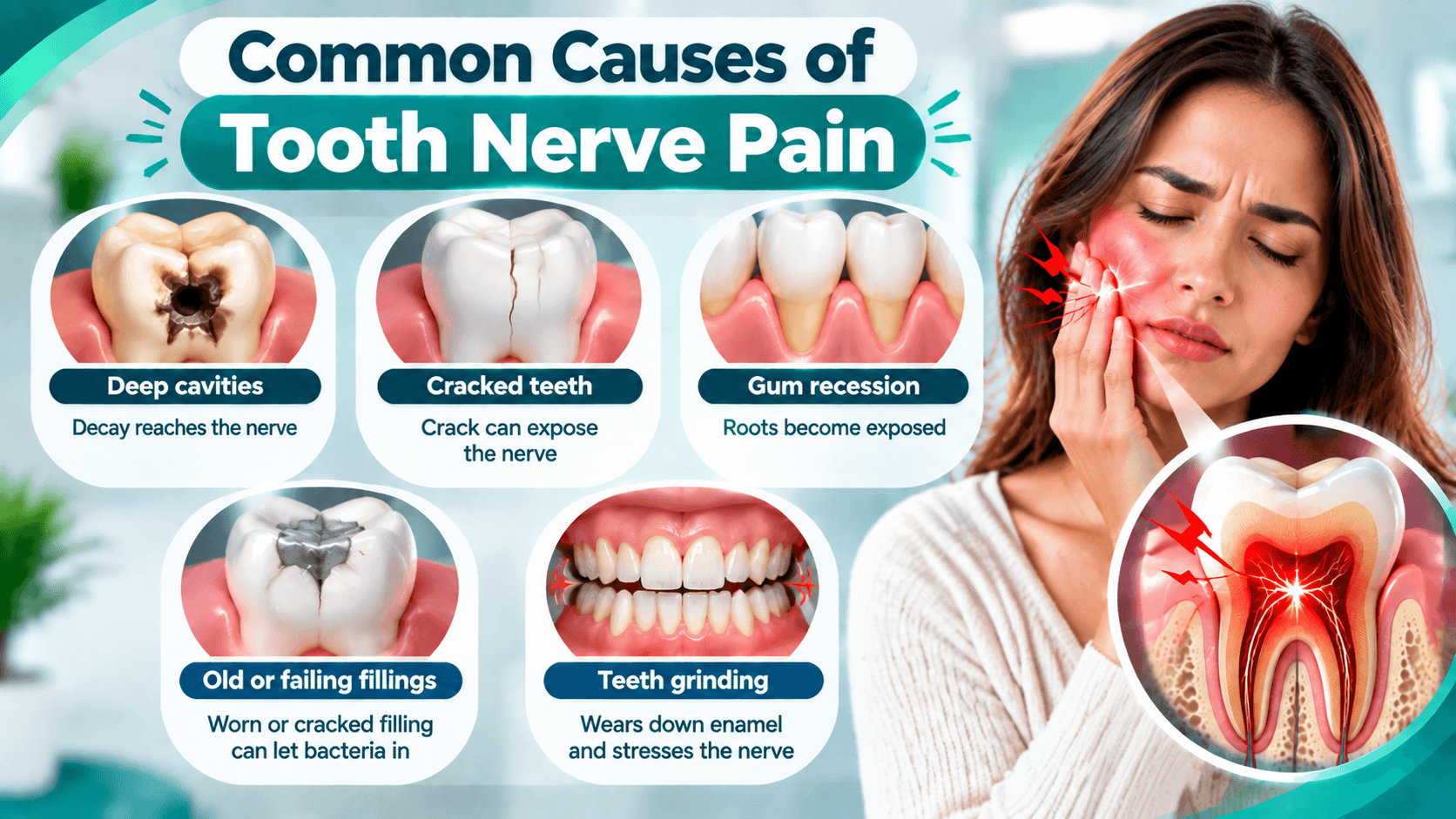
Understanding why the nerve is hurting in the first place can help you avoid the problem in the future. Some of the most common causes include:
- Deep cavities: When decay reaches the inner layer of the tooth, it can irritate or infect the nerve
- Cracked or chipped teeth: A crack can expose the nerve, creating a tooth with an exposed nerve that is vulnerable to bacteria and temperature changes
- Gum recession: When gums pull back, the sensitive root surface can become exposed
- Old or failing fillings: A filling that has worn down or cracked can let bacteria reach the nerve
- Teeth grinding: Grinding at night can wear down enamel and put pressure on the nerve over time
Knowing the cause matters because it affects the right treatment. A dentist will need to examine the tooth and, in many cases, take an X-ray to see what is really happening inside.
Why Quick Fixes Do Not Solve the Real Problem
Even if a home remedy dulls the pain for an hour or two, the underlying issue remains. A cavity does not heal itself, and a cracked tooth does not seal itself. Relying only on temporary relief can allow the problem to worsen beneath the surface.
This is why dentists recommend treating the cause, not just the symptom. Masking pain with home remedies for days or weeks at a time often means the tooth infection or decay is spreading while you wait.
Safe Ways to Get Fast Tooth Pain Relief at Home
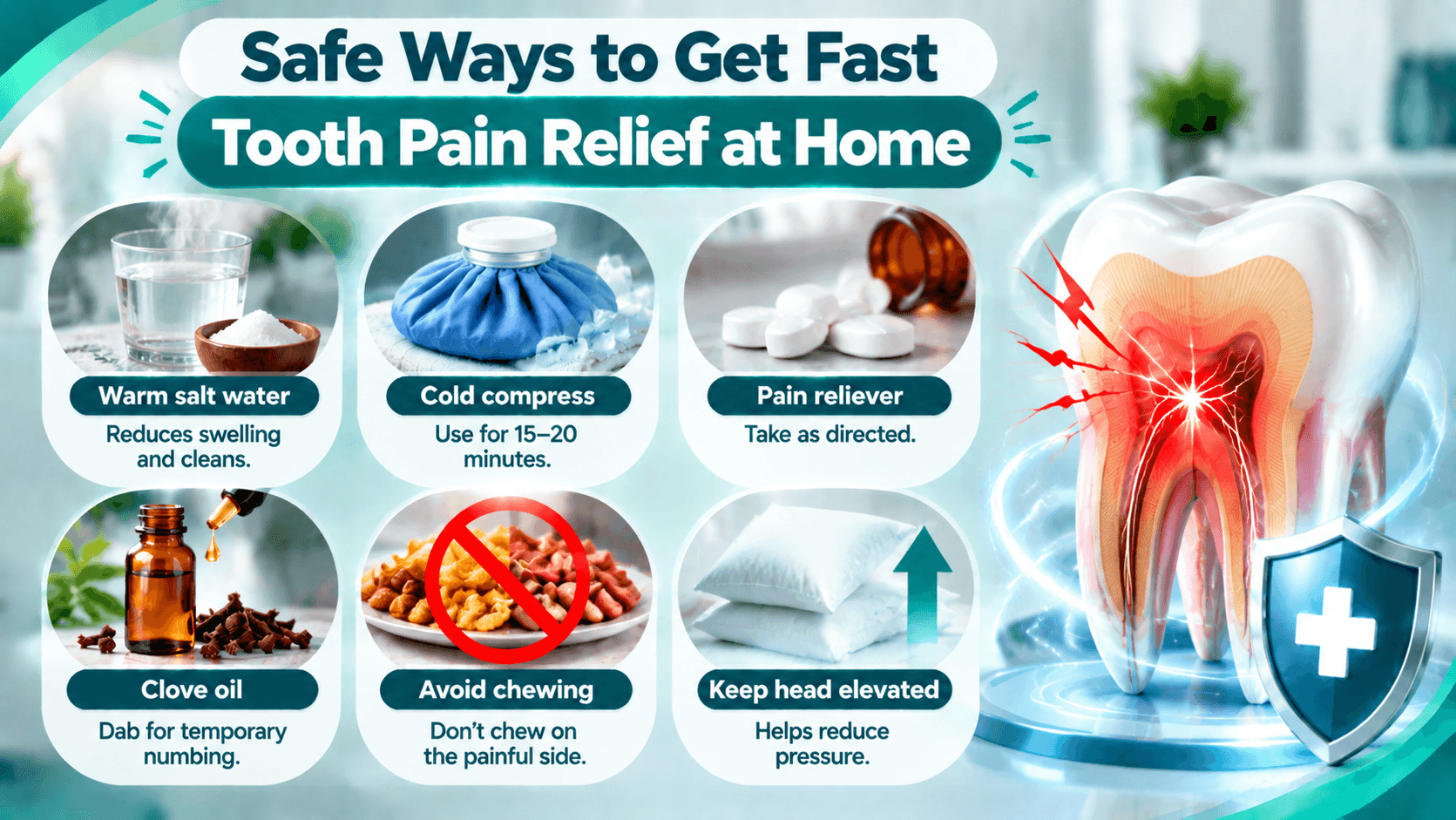
While you wait for your appointment, you can safely ease tooth pain. These will not kill the nerve, but they can make the pain more manageable.
- Rinse your mouth with warm salt water to reduce swelling and clean the area
- Apply a cold compress to the outside of your cheek for 15 to 20 minutes at a time
- Take an over-the-counter pain reliever, following the label directions
- Dab a small amount of clove oil on the area with a cotton swab for temporary numbing
- Avoid chewing on the side of your mouth with the pain
- Keep your head elevated while resting, since lying flat can increase pressure in the area
What NOT to Do for Tooth Pain
Some home remedies that spread online can actually cause harm. Avoid these:
- Do not place aspirin directly on your gum or tooth, since it can burn the tissue
- Do not use rubbing alcohol or nail polish remover in your mouth
- Do not apply extreme heat to the area, since it can worsen swelling
- Do not use large amounts of numbing gel, especially on children, since it can cause side effects
- Do not ignore the pain for too long, hoping it will go away on its own
When Home Remedies Aren’t Enough
Home remedies are only meant to help you get through the wait until you see a dentist. If you notice any of the following, treat it as a sign to seek care quickly:
- Pain that keeps getting worse instead of better
- Swollen gums
- Fever along with tooth pain
- Pain that interferes with sleeping or eating
- Bad breath or taste in your mouth that does not go away
According to the National Institute of Dental and Craniofacial Research, untreated tooth decay and infection can worsen quickly, so early treatment is important to prevent further damage.
Permanent Relief in Shelby Township
The only way to truly and permanently stop tooth nerve pain is through professional dental care. A root canal can save the tooth and end the pain, while an extraction may be needed if the tooth cannot be saved.
If you are dealing with ongoing tooth pain, do not wait for it to become an emergency. Our earlier guide on 10 signs you need to visit a dentist in Shelby Township covers additional warning signs to watch for. You can also learn more about what causes mouth pain in our post on bacteria and oral health.
Final Thoughts
There is no safe way to kill a tooth nerve in 3 seconds at home, and claims like this can be misleading. You can manage pain safely while you wait for treatment, and lasting relief comes from a dentist, not a quick online trick.
If tooth pain is affecting your daily life, contact a dental office near you. Fast, professional care is the safest way to protect your smile and stop the pain for good.
People Ask About Tooth Nerve Pain
1. Can you really kill a tooth nerve in 3 seconds?
No. There’s no proven method to permanently kill a tooth’s nerve in 3 seconds. Home remedies numb pain briefly, but real relief needs a dentist.
2. What kills tooth nerve pain fast at home?
Warm saltwater rinses, a cold compress, and over-the-counter pain relievers can quickly ease tooth nerve pain until you’re able to see a dentist.
3. Does clove oil kill tooth nerve pain?
Clove oil contains eugenol, a natural numbing agent that can temporarily dull tooth nerve pain. It’s short-term relief, not a permanent cure.
4. How do you know if a tooth nerve is dying?
Signs of a dying tooth nerve include sharp or throbbing pain, sensitivity to hot and cold, tooth discoloration, swollen gums, and pain when biting down.
5. Can salt water relieve tooth nerve pain?
Yes. Warm salt water rinses reduce swelling and clean bacteria around the tooth, which can temporarily lower nerve pain and irritation until you get treated.
6. Is ice or heat better for tooth nerve pain?
Ice is usually better. A cold compress numbs the area and reduces swelling, while heat can increase blood flow and sometimes worsen nerve pain.
7. Can tooth nerve pain go away on its own?
Tooth nerve pain may fade temporarily, but the underlying infection or damage rarely heals on its own. Without treatment, it usually returns and can worsen.
8. What happens if a dying tooth nerve is left untreated?
Left untreated, a dying tooth nerve can lead to infection, abscess, bone loss, and eventually tooth loss. Early treatment helps save the natural tooth.
9. How long does tooth nerve pain last?
Tooth nerve pain can last minutes, hours, or days depending on the cause. Pain lasting more than a day or two needs a dentist’s evaluation.
10. When should you see a dentist for tooth nerve pain?
See a dentist if the pain is severe, lasts more than a day, worsens with hot or cold, or is accompanied by swelling, fever, or a bad taste.


