Teeth whitening is one of the most commonly performed cosmetic dental procedures, yet patient expectations often do not align with clinical reality. A key question arises early in the decision-making process: how many shades can teeth actually be whitened?
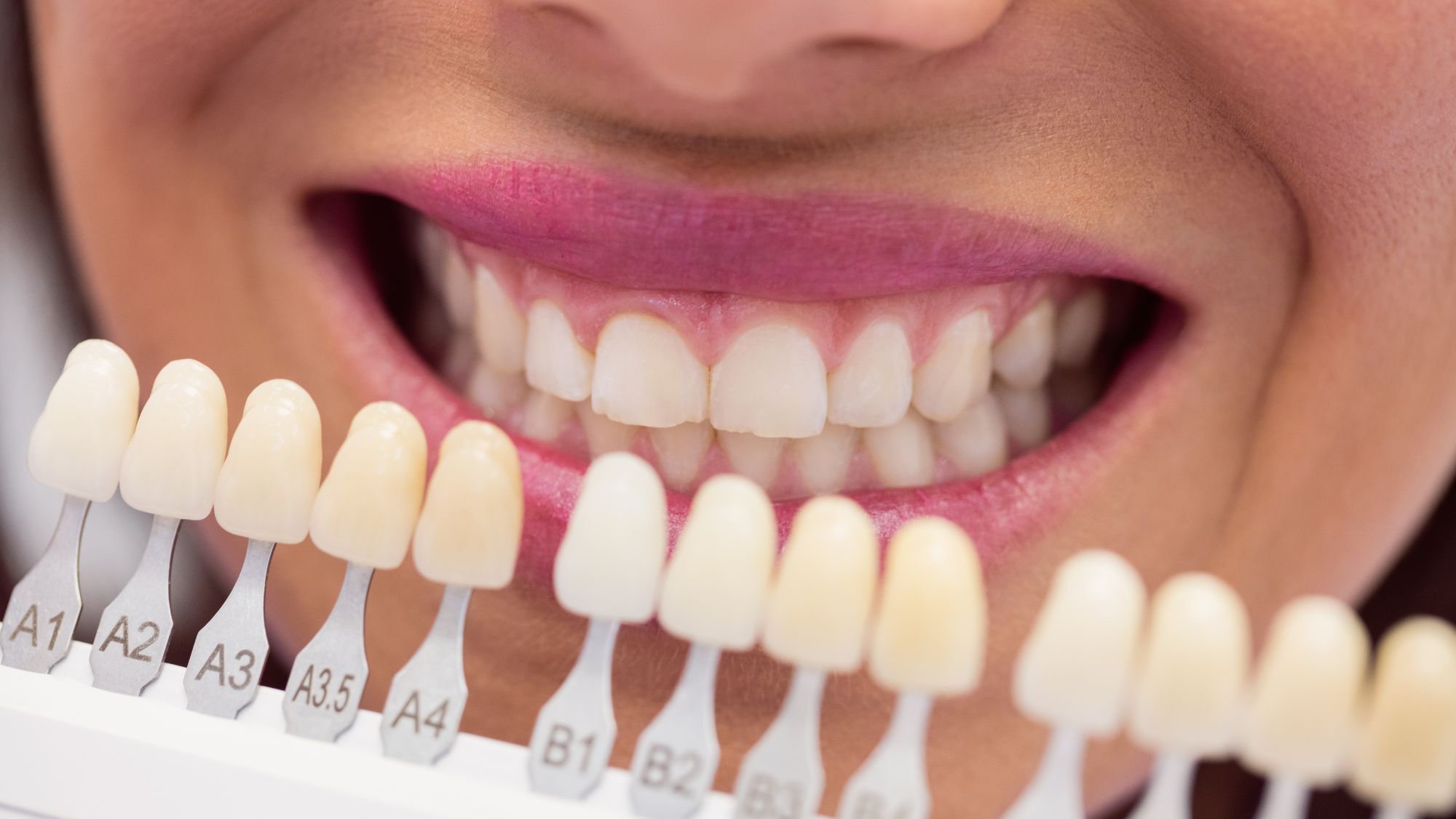
In most real-world cases, teeth whitening can lighten teeth by about 3 to 8 shades. Teeth whitening results in an average lightening by 3-8 shades of the VITA shade guide. According to the patient’s initial tooth shade, the type of staining (exogenous or endogenous), the level of enamel porosity, and the concentration of bleaching agents. It should be noted that results vary greatly.
This article provides a scientific explanation of the teeth-whitening procedure, its limitations, and the biological factors that contribute to the final outcomes, thereby establishing a basis for realistic expectations in the dental literature.
How Many Shades Can Teeth Whitening Lighten?
When we talk about shades, dental professionals usually refer to the VITA Classical Shade Guide, which is the industry standard for measuring tooth brightness. Most people aren’t looking for a specific number; they just want to see a noticeable difference.
However, knowing the technical range helps you manage your expectations so you don’t over-process your enamel.
Average Shade Improvement Most People Can Expect
On average, most professional whitening treatments can lighten teeth by 3 to 8 shades. This is a broad range because everyone starts from a different baseline. If you have mild, surface-level staining from a year of moderate coffee drinking, you might jump 3 shades and look significantly brighter.
However, if you have severe, deep-set staining, a 5-shade jump might still leave you feeling like there is work to be done. The ceiling for how white your teeth can go is actually determined by your genetics and the thickness of your enamel, not just the strength of the bleach.
How Quickly Whitening Results Become Visible
The speed of your results depends entirely on the delivery method. An in-office power bleaching session uses a high-concentration peroxide (often 25-40%) activated by a light source, providing a 3- to 5-shade jump in a single 60-minute visit.
At-home kits that use lower concentrations for safety typically require 7 to 14 days of consistent use to achieve the same results. The speed isn’t just about the chemicals; it’s about how long the whitening agent stays in contact with the tooth structure without causing irritation.
Can Teeth Become Too White?
Yes, and it is a condition sometimes colloquially called bleachorexia. When teeth are over-whitened, the enamel can lose its natural translucency and appear chalky or even grayish-blue. This happens because the bleach has stripped away too much of the tooth’s organic tint, leaving it looking lifeless and artificial.
Beyond aesthetics, excessive whitening can lead to dentinal hypersensitivity, in which the microscopic pores in your teeth (tubules) remain open, causing sharp pain when you consume hot or cold foods or drinks.
Factors That Affect How Many Shades Teeth Can Lighten
It isn’t just about the product you choose; your unique dental history plays a massive role in your results. If two people use the exact same whitening kit, one might see a dazzling transformation while the other sees almost no change.
Type of Tooth Stains
Stains are categorized as extrinsic (on the surface) or intrinsic (inside the tooth). Extrinsic stains from coffee, tea, and red wine are the easiest to remove and usually show the most dramatic shade improvements.
Intrinsic stains, which are part of the tooth’s internal structure, are much more stubborn. Whitening agents must penetrate deep into the tooth to break these down, which requires more time and higher peroxide concentrations.
Age and Tooth Condition
As we age, the outer layer of white enamel naturally thins due to wear and tear. Beneath the enamel is dentin, which is naturally yellowish. In older adults, the teeth often appear more yellow because more of the dentin is showing through the thinned enamel.
Because whitening targets the enamel, those with very thin enamel may find it difficult to achieve a bright white look, regardless of the treatment used.
Existing Dental Work
This is one of the most important things to remember: Whitening agents do not work on prosthetic materials. If you have crowns, veneers, bonding, or tooth-colored fillings, they will stay the exact same color they were the day they were installed.
If you whiten the surrounding natural teeth, your dental work may suddenly look dark or yellow by comparison, creating an uneven patchwork smile.
Lifestyle Habits That Affect Whitening Results
Your daily habits act as a constant counter-effort to whitening. Smoking is the primary offender, as nicotine and tar create deep, stubborn brown stains. Additionally, if you are looking for teeth whitening in Michigan, the local culture of enjoying dark roasted coffees or colorful dessert-inspired treats can contribute to re-staining if you don’t maintain a strict oral hygiene routine post-treatment
What Teeth Whitening Cannot Fix?
While modern dental technology is impressive, it is not magic. There are certain types of discoloration that chemical whitening simply cannot touch.
Gray or Blue-Toned Discoloration
Most whitening products are designed to combat yellow or orange tones. If your teeth have a gray or bluish tint, this is often a sign of internal issues. This can be caused by the use of tetracycline antibiotics during childhood or the presence of old metal amalgam fillings that have leached color into the tooth structure over decades. In these cases, 8 shades of lightning are rarely possible.
Internal Tooth Damage
If a single tooth is significantly darker than the others, it may be non-vital. Meaning the nerve has died due to trauma. This discoloration comes from the inside (similar to a bruise under a fingernail) and cannot be fixed by applying bleach to the outside. This requires internal bleaching performed by a dentist during a root canal procedure.
Realistic Expectations From Teeth Whitening
To get the most out of your whitening journey, you have to shift your perspective from perfection to improvement.
Social Media Whitening Myths
It is vital to remember that almost every perfect smile you see on social media is the result of either porcelain veneers or digital filters. Apps can instantly whiten teeth by 20 shades with a single swipe, creating a beauty standard that is biologically impossible. Real teeth have texture, slight color variations, and a natural translucency.
Healthy White Teeth vs. Ultra-Bleached Teeth
A good rule of thumb used by cosmetic dentists is the Sclera Rule. For a natural and attractive look, your teeth should generally not be whiter than the whites of your eyes (the sclera).
If your teeth are brighter than your eyes, they tend to look fake and draw attention for the wrong reasons. A healthy smile is one that looks clean and vibrant, not one that looks like a row of white piano keys.
Conclusion
At the end of the day, teeth whitening is more about personal biology than just a bottle of bleach. Whether you’re aiming for a subtle refresh or a major eight-shade transformation. Keeping your enamel healthy is what truly matters for a lasting, radiant smile.
Remember, the most effective results always come from a plan tailored to your specific dental history. If you’re ready for an expert’s take on your smile, schedule a visit with Pearly Smile Dental Studio today to find your perfect, healthy shade.